CREATED & DEVELOPED
A connected proposition.
Purpose, positioning, the People–Place–Practice ecosystem, podcast production, an identity direction and website architecture and development.
A founder-led venture built across strategy, experience design, editorial production and identity. Over a year of connecting the idea, the room, the voice and the practical work of bringing an institution into being.
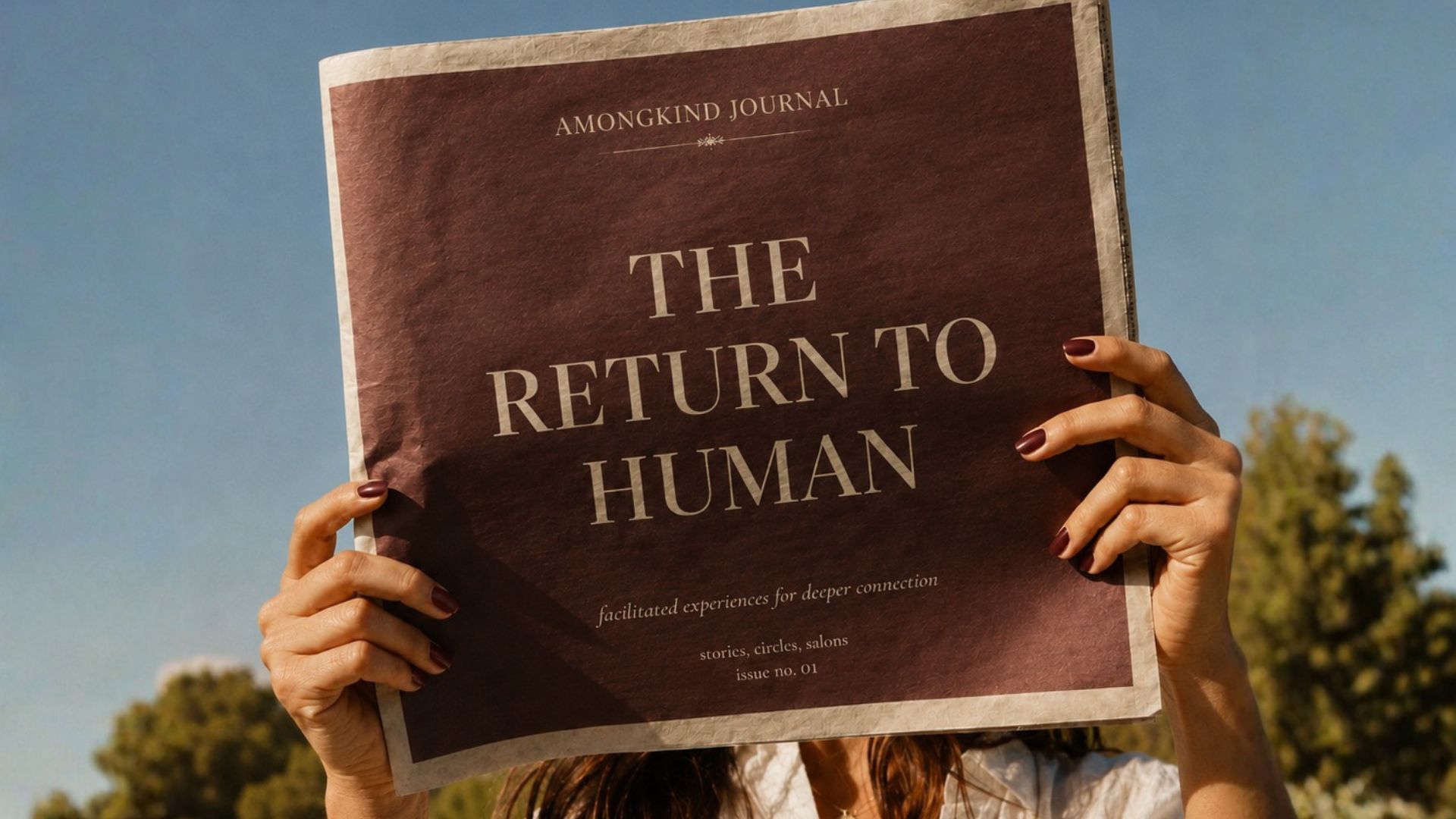
Purpose, positioning, the People–Place–Practice ecosystem, podcast production, an identity direction and website architecture and development.
An early gathering at The Conduit under NOEMA Network, followed by further refinement of the facilitation approach and wider concept.
Method documentation and testing, retreat concepts, sensory experience design, partnership development and the evolving digital presence.
As a solo founder, I wanted somewhere to think aloud with people who understood the uncertainty of building something of their own. I kept meeting people with depth, but the format often left us at introductions and job titles. I began designing the room I was looking for.
That personal need became a strategic question: what conditions help people recognise one another, participate and build a relationship beyond the first encounter?
The work first took shape as NOEMA Network. In 2025, I held an early pilot at The Conduit, bringing the idea into a real room and beginning to test how a gathering could invite a different quality of conversation.
The pilot gave the concept a practical starting point. I continued refining the purpose, the programming and the way people move from arriving to taking part. It has been over a year of founder-led development, alongside my work through Mirad Studios.
I brought the expanding ideas into a three-part ecosystem. People, Place and Practice connect who gathers, where they meet and how the encounter deepens.
Individuals seeking connection, alongside communities already gathered within clubs, teams and organisations.
Cultural venues, galleries, clubs and organisational spaces, with their own character and possibilities.
Programming, facilitation and the developing Threshold Method: the human layer inside the room.
The partner strategy connects an existing place and community with considered programming, creating a practical route to testing and developing the work.
The Threshold Method is the facilitation approach I developed to help a room move from introductions into meaningful conversation. It considers the invitation, arrival, questions, pacing, silence, closing and what happens afterwards. Participation needs room for listening and hesitation as well as speaking.
I continue to document and test the approach as it develops. The aim is to make depth accessible at a pace people can choose, with care for how much they want to share.
My experience design extends into sound, scent, materials and the rhythm of a gathering: the signals that help someone arrive, settle and pay attention. Sensory choices belong to the meaning of the experience.
Retreat concepts and cultural formats extend that thinking into longer encounters. These are programmes in development, with their structure, atmosphere and participant journey being shaped before a wider rollout.
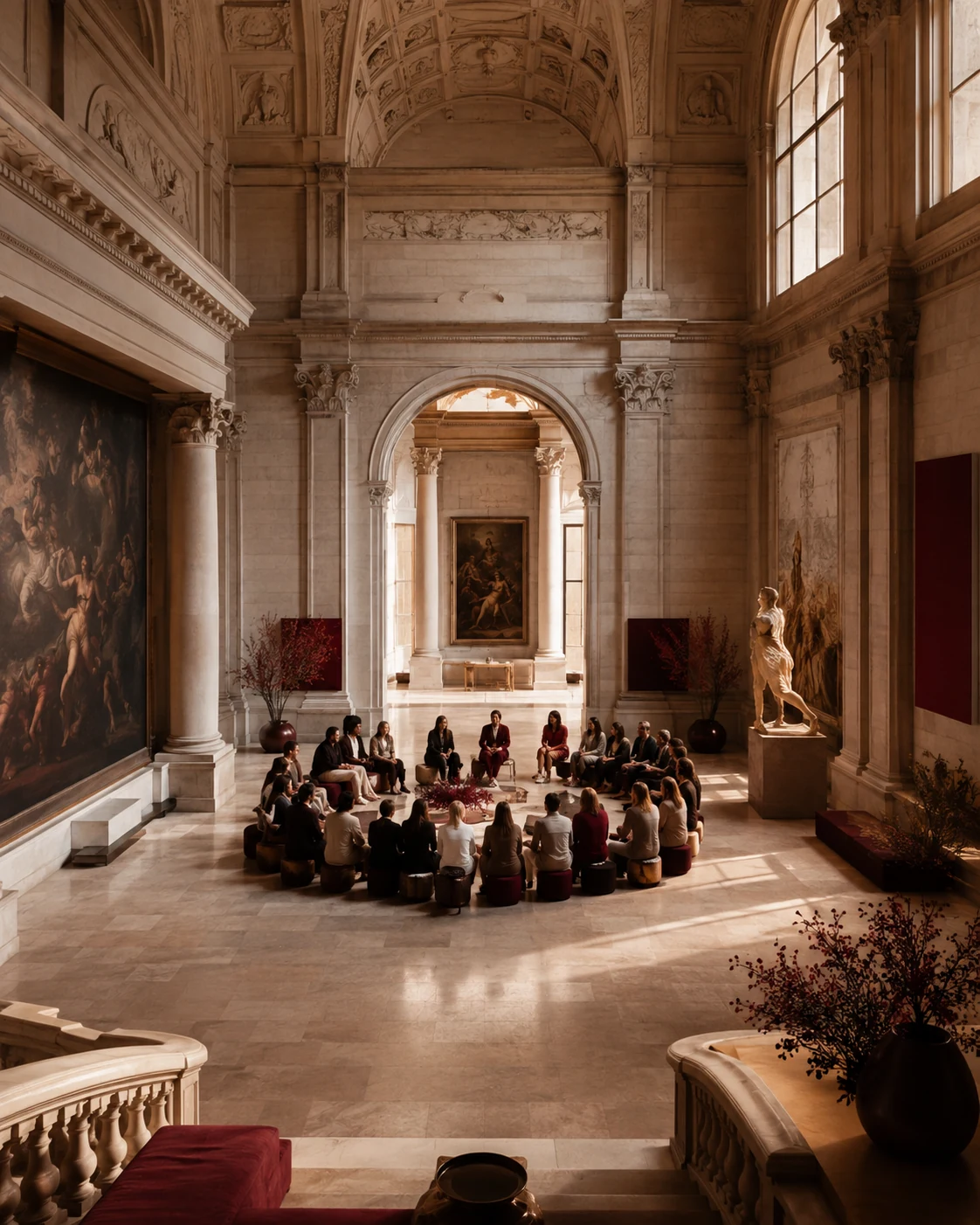
A visual exploration of AMONGKIND in a cultural setting: people, place and practice brought together through a shared encounter.
Concept visual for future gatherings.
I developed the podcast as a way to explore and give voice to the questions behind the work: how we live, connect, lead and remain human. It gives the institution an editorial life between gatherings.
Working with an existing studio and set, I hosted, filmed and edited long-form conversations independently. The Quiet Revolution continues as AMONGKIND’s public voice as the earlier NOEMA material transitions into the new identity.
Selected episode / Tim Allen: Beyond the Lens · Hosting, independent filming and editing.
As the purpose became clearer, I evolved the work into AMONGKIND: an independent institution in development, exploring how we live, connect and lead in a changing world. The transition brought naming, positioning, programme architecture and the editorial voice into a more coherent relationship.
That evolution also reaches the website: shaping the structure, writing and digital experience through which a venue, organisation or future participant can understand the work and find a relevant way in.
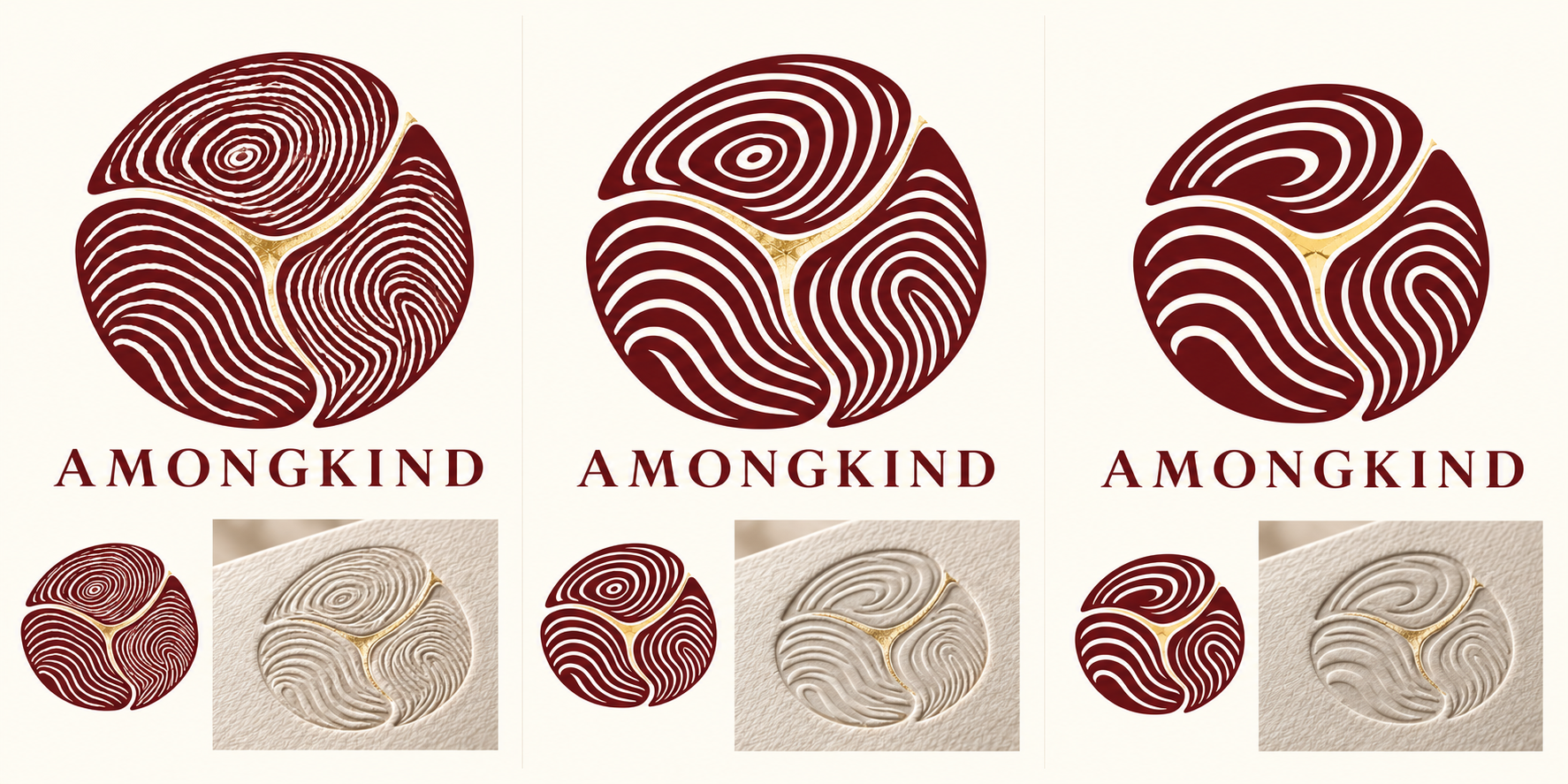
The emerging identity brings several meanings into one visual direction. Fingerprints suggest the particularity of each person. The forms gather around a shared centre, with gold joining the parts. Texture gives the identity a sense of touch and material presence.
The visual exploration moves from a detailed master emblem to simpler versions for smaller uses. It is a developing identity system, connecting the philosophy with a recognisable visual expression.
I have led the concept, research, strategic architecture, programming, facilitation development, podcast production, naming transition, brand direction and website development. Each part asks the same question: does the experience reflect the purpose?
AMONGKIND is an institution I am building. This case study captures the work of creating and evolving it: the decisions already made, the first room tested and the next experiences taking shape.